Xbox Watch focuses on the strength of the Xbox ecosystem rather than individual titles alone.
We track:
This section helps players understand where Xbox offers the best long-term value.
Since its launch in 2001, Xbox has taken a distinct approach to gaming—prioritizing hardware performance, online infrastructure, and increasingly, a connected ecosystem of devices, services and platforms. Rather than focusing solely on individual console generations, Xbox has evolved into a unified gaming environment spanning consoles, PC, cloud and subscriptions.
The first Xbox entered the market with a clear emphasis on technical capability and online gaming. Titles such as Halo: Combat Evolved, Project Gotham Racing, Fable and Jet Set Radio Future established the brand’s identity around powerful hardware and connected play. Xbox Live,introduced during this era, permanently changed how console gamers played multiplayer.
The Xbox 360 defined a generation through a massive third-party library, digital distribution and multiplayer dominance. It delivered landmark franchises such as Halo 3, Gears of War, Forza Motorsport, Mass Effect, Call of Duty, Skyrim and Red Dead Redemption. Xbox Live Arcade expanded indie and downloadable games, while achievements and party chat became industry standards.
With the Xbox One, Microsoft shifted toward long-term platform services. While exclusives such as Halo 5, Forza Horizon, Sea of Thieves and Ori and the Blind Forest defined the generation, the larger impact came from backward compatibility, cloud saves, and early moves toward subscription-based gaming. Xbox increasingly positioned itself as more than a single console.
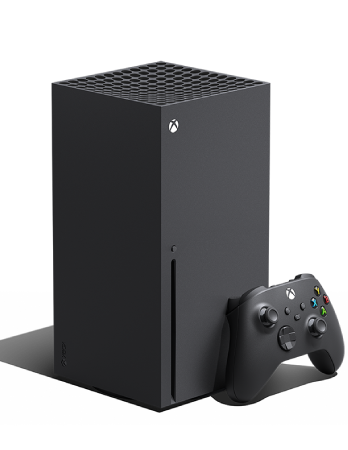
The Xbox Series X and Series S continue that strategy with fast SSDs, ray tracing and cross-generation compatibility. First-party titles such as Halo Infinite, Forza Horizon 5, Microsoft Flight Simulator, Starfield and Hi-Fi Rush coexist with a massive multi-platform library. Most importantly, Microsoft unified console, PC and cloud gaming under one ecosystem.
Rather than defining success by individual releases, Xbox has centered its identity around Xbox Game Pass, offering access to hundreds of games across console, PC and cloud. This includes:
- First-party titles at launch
- Third-party releases and indie games
- Legacy titles through backward compatibility
- Cross-platform progression and saves
The result is one of the most accessible and value-driven gaming ecosystems in the industry, where ownership is increasingly replaced by access.
Xbox games today are designed to work across:
- Multiple console generations
- PC and console simultaneously
- Cloud streaming via Xbox Cloud Gaming
This means that Xbox’s “library” is no longer tied to a single box, but exists as a connected network of devices, accounts and services.
From the original Halo to cloud-based gaming across devices, Xbox has transformed from a console into a service-driven platform. Xbox Watch continues to evaluate not just what games are released, but how accessible they are, how they perform across hardware, and how much value the ecosystem delivers over time—helping players decide where Xbox fits best in their long-term gaming experience.